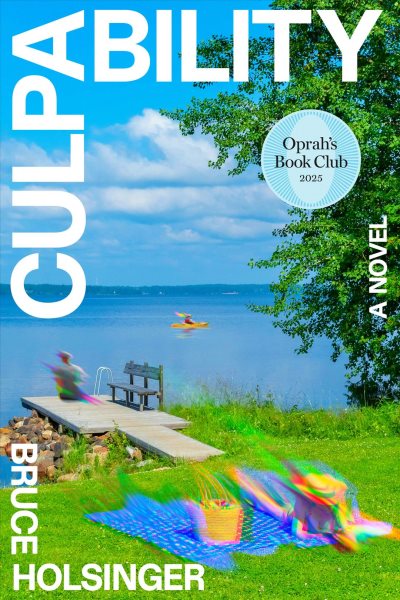
Brown Baggers had a timely discussion of Culpability (2025) by Bruce Holsinger on September 17th. (Brown Baggers previously read The Gifted School by Holsinger, who lives in Charlottesville and is a UVA professor.) “Culpability” has had huge success due to being an Oprah Winfrey Book Club pick and also due to the relatability of the family drama and the timeliness of the topic of Artificial Intelligence, its everyday uses and risks.
As the story begins, a family of five is going to a soccer tournament in a self-driving SUV. Due to a confluence of circumstances, the vehicle swerves and hits another car, killing the two elderly occupants inside. For varied reasons that unfold, each person in the family feels culpable for the fatal accident. Most of our readers loved this selection and found it an engaging and quick read.
Most of the group’s discussion centered on Artificial Intelligence (AI), its risks and uses and the related ethical issues. One reader noted that AI needs to police itself; not outwit itself. AI is obviously built for profit and profitability, not morality. Our readers agreed that AI is only as moral as the people developing it.
Some of our discussion also centered around the word “Culpability” and how it differs from fault and/or guilt.
Readers were impressed with how well the author drew out the family dynamics and dysfunctions. Neither parent came off well to our readers. Readers expressed empathy for the middle daughter Alice and were most disturbed by Alice’s regular use of a ChatBot as a confidant and friend. We were also disappointed in the apparent cluelessness of the parents who had no idea their daughter’s “friend” was a ChatBot. Our readers didn’t see the need for the side plot points of the romance between the young adults or the rich AI mogul Monet vacationing nearby.
Towards the conclusion of the story, Holsinger introduces the concept of restorative justice. (Restorative justice focuses on harm repair between the offender and the victim rather than incarceration or punishment.) While the fatalities and repercussions of this car accident affect the whole surviving family, the ability to heal with restorative justice practices helps them move forward.
Additional reading:
- Terminator 2: Judgment Day
- The Proving Ground by Michael Connelly
- The Displacements by Bruce W. Holsinger (2022)
- Central Virginia Community Justice
- Q&A: Why Did Oprah Call This UVA Professor?
Upcoming Brown Baggers titles:
- October 15, 2026 The Prime of Miss Jean Brodie by Muriel Spark
- November 19, 2026 The Human Stain by Philip Roth
- December 17, 2026 Annual potluck and selection meeting