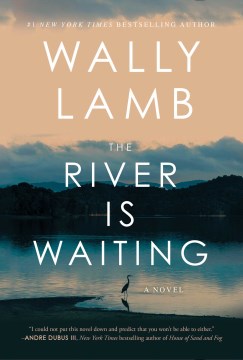
Books on Tap met on Jan. 8th at Random Row to discuss The River is Waiting by Wally Lamb. Although a very difficult and emotional read, the novel was well received by the group and garnered votes of 4 and 5 on a scale of 1 (1 being the worst) to 5. Most readers could relate to Corby and felt his pain. We all disliked the way the justice system worked but agreed that the story seemed true to the portrayal of life in a correctional facility. Wally Lamb started writing the novel 2 years before COVID and we found the structure of the book and his writing style interesting. There were elements of foreshadowing which kept the story moving along.
A lively discussion centered around the question: (spoiler alert!) Did the story have to end with Corbin dying of COVID mere months before he was set to be released? Members pointed to various themes to attempt to answer the question. One member felt lying was the main theme of the work – sharing that sometimes a lie brings a huge penalty, other times nothing at all comes of it. This reader felt that Corbin was lying to only himself at the end. Others disagreed, pointing to themes of forgiveness, atonement, trust, control, truth, faith, and hope. “There but by the grace of God go you and I.” We all stumble from time to time but all hope to get back up. To counter the theme of lying, readers pointed out that Corbin sticks to the truth about his substance abuse the morning of the tragic event, instead of lying to keep himself out of jail or from possibly receiving a lesser sentence.
Another critical question we discussed was did Lamb write the novel to shine a light on our criminal justice system? The realistic, believable portrayal of the justice system throughout the novel had us all feeling anger toward the serious inmate abuse at the hands of the correctional officers and many felt that treatment was unforgivable. A few members shared personal stories about experiences they had working within the system and some ugly truths about the horrendous abuse officers impose on inmates with little to no disciplinary actions against them. It was pointed out that the role of support staff within the system – being a chaplain, librarian, counselor, Doctor, educator, or volunteer, for example – is an extremely difficult and emotional job.
This led us to a discussion of the characters. The prison librarian (YAY!!!!) was hands down a favorite character. Also mentioned were Manny, Lester, Javier, and Solomon. One reader felt Corby was an anti-hero. Another attendee didn’t like Corby and found him irritating. Coby’s father and all of the lost feelings between the two of them was sad. We didn’t find his letter going missing for so long as being plausible. Are the river and the stone characters? Yes. The physical river and the river in the mural both represent freedom.
We discussed timing. One reader felt the novel was very timely and deliberately set using Corby dying of COVID at the end of the novel as an example. Was it serendipitous that Corby was in prison during the onset of COVID? Corby had no control inside or outside the prison so it appears so. As for the timing of Corby’s death, one member thought If he hadn’t qualified for early release, which cut short the time he needed to wean himself off of the prescription drugs, he would have probably been fine. What would happen to one of us if tonight we found ourselves sucked into the bowels of the criminal justice system?
Corby’s actions were appreciated by readers, one feeling that he was a very aware character, although “reading the tea leaves” was not his strong suit. He was seen as a father figure when he took Solomon under his wing on the work crew and especially when he stood up to the officers after the abuse and death of the mother turkey. One attendee questioned whether or not one inmate taking another under his wing would actually happen within the system. When he exploded at the check-out desk the morning he was denied early release it was understandable to the group. One parent had empathy for Corby. Losing a kid must be sorrowful enough and then being sentenced to prison for the accident felt like torture. Why did the author do that to this young family? Corby wasn’t a bad person, he just made bad decisions. In the end, the mural redeemed Corby and set many of the inmates and other characters free. In that mural the river carried several of Corby’s jail mates away to freedom.
People these days get sent to prison for exactly the same things represented in the novel. In our area, restorative justice is an available option offered by Central Virginia Community Justice. One reader cited a local example when restorative justice was used in the case of a vehicular homicide.
One attendee listened to the audiobook and enjoyed it. Could there be a movie down the road, we wonder? The group agreed that this is a difficult book to recommend to someone. Thanks to John for this interesting website: Inside Circle
Other Books by Lamb
Other Books Mentioned – BTW – all by authors who live in Virginia:
- Culpability by Bruce Holsinger
- Demon Copperhead by Barbara Kingsolver (many overlapping themes)
- Dopesick: Dealers, Doctors, and the Drug Company That Addicted America by Beth Macy.
Books going forward:
- February 5: Master Slave Husband Wife: An Epic Journey from Slavery to Freedom by Ilyon Woo
- A cool website that illustrates the epic journey of William and Ellen Craft.
- March 5: The House of Eve by Sadeqa Johnson (Same Page Community Read)
- April 2: All Fours by Miranda July
- May 7: The House of Broken Angels by Luis Alberto Urrea
I just read the summary of the book group meeting and agreed with everyone’s opinion about the book. I also found it interesting about would you recommend this book to someone. I happen to have been in a library and someone was contemplating whether to read it or not. I did not really recommend it. At times I felt it was too long. The depiction of the penal system wasn’t something I didn’t already know. I would rather Lamb had concentrated on Corby’s rehabilitation and what his life would have been like after being released and his relationship with his family. How can you forgive yourself after such a horrific tragedy. I did not like the ending. It felt like an after thought. Would Lamb have had Corby die in prison if Covid hadn’t happened?I would give it a 3.